
The process
How a house relocation actually works
If you are weighing up a second hand building or a relocatable home, this is the whole sequence, in order, including the parts people find out about too late.
6 steps7 min readInformation pack available
We are happy to point you in the right direction if you are exploring the option of buying a second hand building or a relocatable home. Relocation is a rewarding and cost effective route into homeownership, and it works just as well for developers and landlords.
We help you choose the right house for your site and purpose, and we give you full detail on the process rather than the highlights.
Information pack
Get the full information pack
Everything on this page plus the detail, in one PDF you can send to your partner, your broker or your council. Tell us where to send it and you will get the download link straight away.
01
Purchasing a site
If you have decided to go ahead, you need a site to put the house on. It has to be suitable, and that means checking four things before you commit:
- No covenant on the property excludes the siting of a relocated home. This is the one that catches people out, because it is invisible until someone reads the title.
- Access is wide enough and unobstructed, at the entrance and along the roads leading to it, for a house to be transported in.
- Power to the site, and drainage and wastewater discharge from it, are both achievable and affordable.
- The site is not in an extremely high wind zone, a potential flood zone, or on unstable ground. You may still be able to relocate there, but it will need additional engineering.
02
Finding the right house
First, make sure the house you are interested in is structurally sound. The houses we stock are chosen because they are good quality and suitable for removal, and most of the older ones are built in strong native timbers.
Think about orientation. You want a layout that can be positioned on your site to make the most of the sun, so it is worth knowing where the sun rises and sets in relation to the main living rooms.
Because you are buying an existing home, you may want to change the layout. Plan those details carefully: opening an exterior wall, adding a door onto a deck, replacing the kitchen or the bathroom. We will point you in the right direction where we can.
03
What you will need
We will give you approximate costings that fit your budget. Alongside that, here is what you will need to have organised.
A geotechnical report
This shows the stability of your soil, which decides what your foundations have to do. Unstable soil can add a great deal to the foundation cost, so treat this as due diligence before you buy a site rather than after. If the report raises concerns you may need an engineer to design the foundations, and that can take a few weeks.
Septic and stormwater reports
These clarify what wastewater system you will need. Whoever does your geotechnical report can usually organise them at the same time. If you have a mains connection you will not need this.
A building report
This attests that the house is in a sound and suitable condition to be moved. Most relocations in Northland and the wider North Island involve one.
A site inspection
This is ours to do, and it is the most useful hour in the whole project. We visit and inspect your site, check the access, and look for anything in the local area or on the route that could block a wide load: trees, bridges, power lines, tight corners.
It may mean we need to cut the house, or crane or winch it to get around an obstacle. If that adds cost we discuss it there and then, so you know the number and the timing before you are committed. It is also the right moment to ask us anything.
Siting and surveying
You will need to decide exactly where on the site the house sits, and have a surveyor peg it out before delivery. The position follows your stamped plans: orientation, the distance from every boundary, and anything that limits placement such as power poles, creeks, ponds or the driveway. We work with architects who are happy to help with placement.
Finance
Some clients need second tier lending or bridging finance. It depends on your situation, and finance for a relocatable home can be harder to arrange than a standard mortgage. A broker is often worth involving, because they tend to be more creative with the application.
Resource consent
A resource consent is usually required to bring a second hand building into an area, and your site may need further consents if you are subdividing or adding a second building. It is not always required, but it pays to be prepared for the extra work and charges.
04
Moving the house
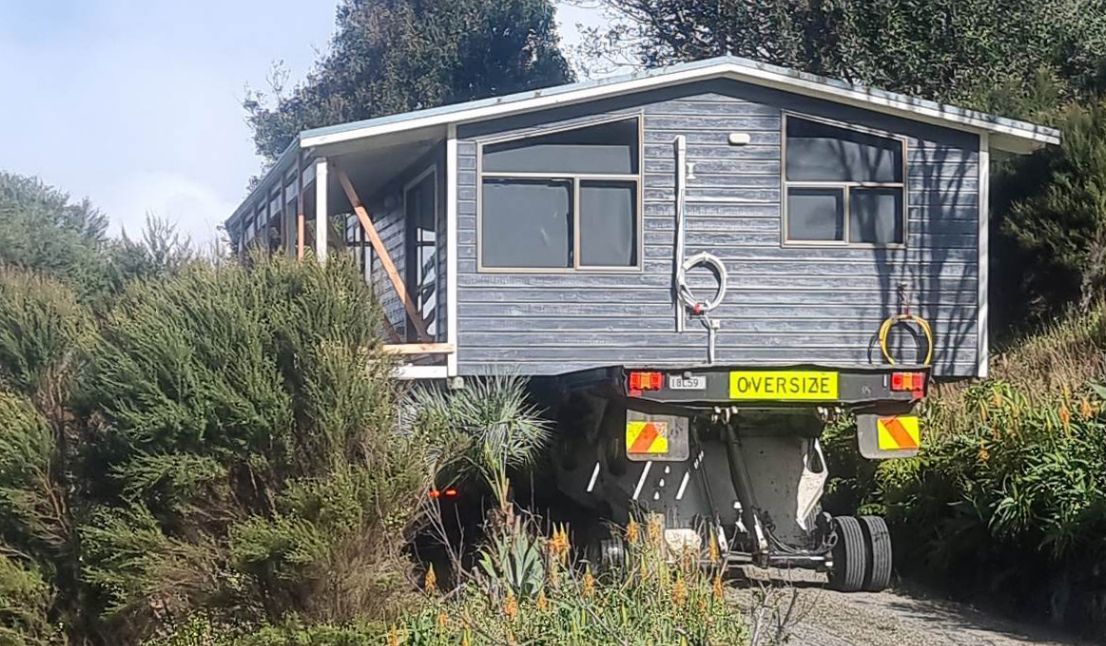
This is the exciting part. Depending on the size and shape of the house it may travel in more than one piece, then be rejoined at the new property and lowered onto its foundations. Moving a house is usually done at night.
A direct relocation from A to B is the most cost effective option. Once the house is down on its foundations you can start on any alterations.
If it is not possible to move directly to your site, we can arrange storage. This is often needed when site work is held up by council requirements. Extra costs may apply.
Once the house is on site you will need to follow strict safety procedures, including safety fencing, and comply with the health and safety law that applies to any building site.
05
Insurance
You will need insurance across the whole relocation. That means cover on the house at its original site from the date of purchase, transit insurance while it is on the road, and contract works insurance for the site work.
Foundation work can begin once the council plans are signed off. If the house has already been moved, it can then be lowered onto its foundations.
06
Questions
We are always happy to meet and talk through anything you are unsure about. We want this to be a good experience, not a stressful one. The FAQs cover a lot of it, and if you would rather just talk to someone, get in touch.
Looking for a stress free building removal service?
Tell us what you are moving and where it needs to go. We will come back to you with the real constraints and the real cost.